01
Chromium-accurate rendering
Every render runs through a real, sandboxed Chromium instance — the same engine behind Chrome. CSS, web fonts and JavaScript behave exactly as they do in a browser tab.
If it looks right in a browser, it looks right in the PDF.
02
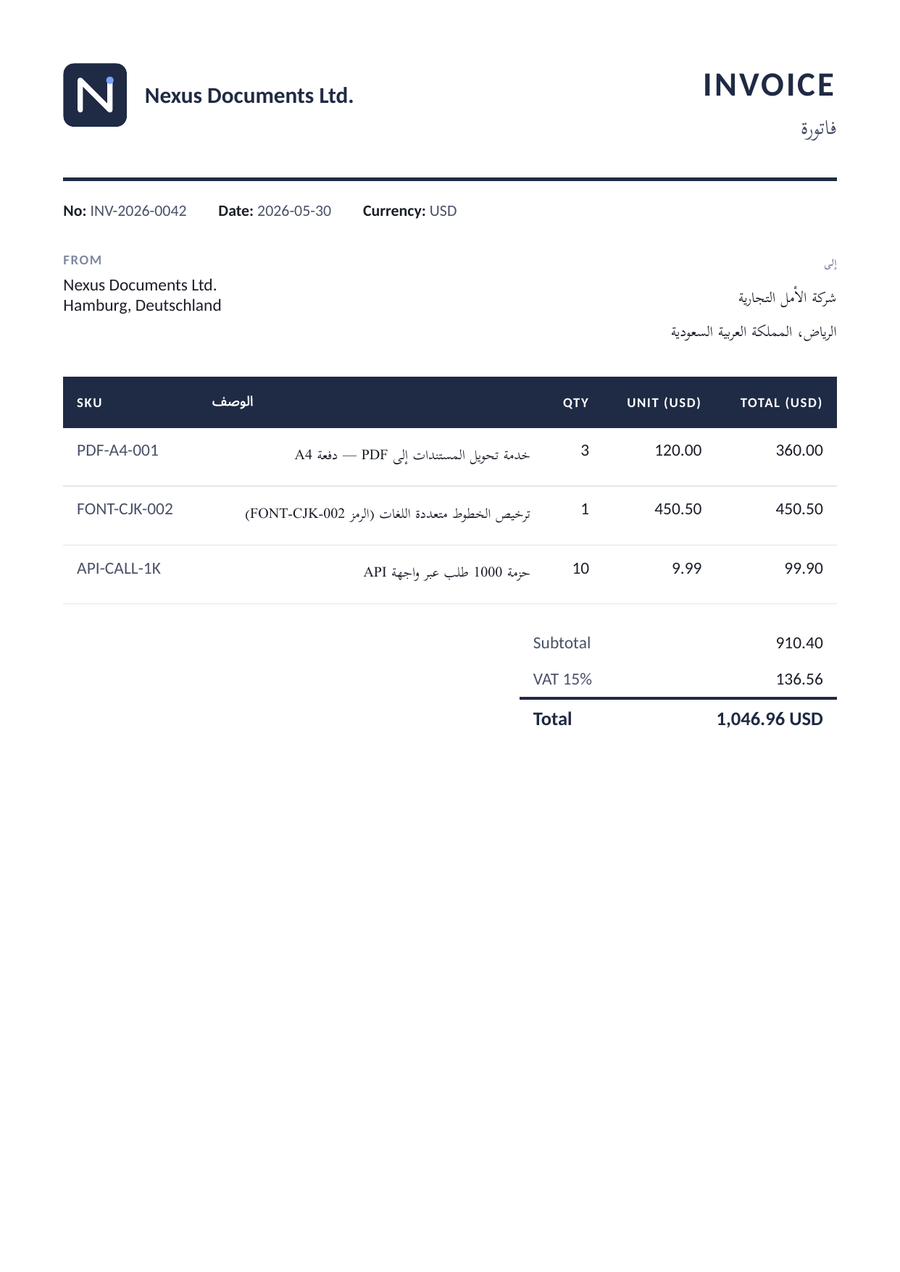
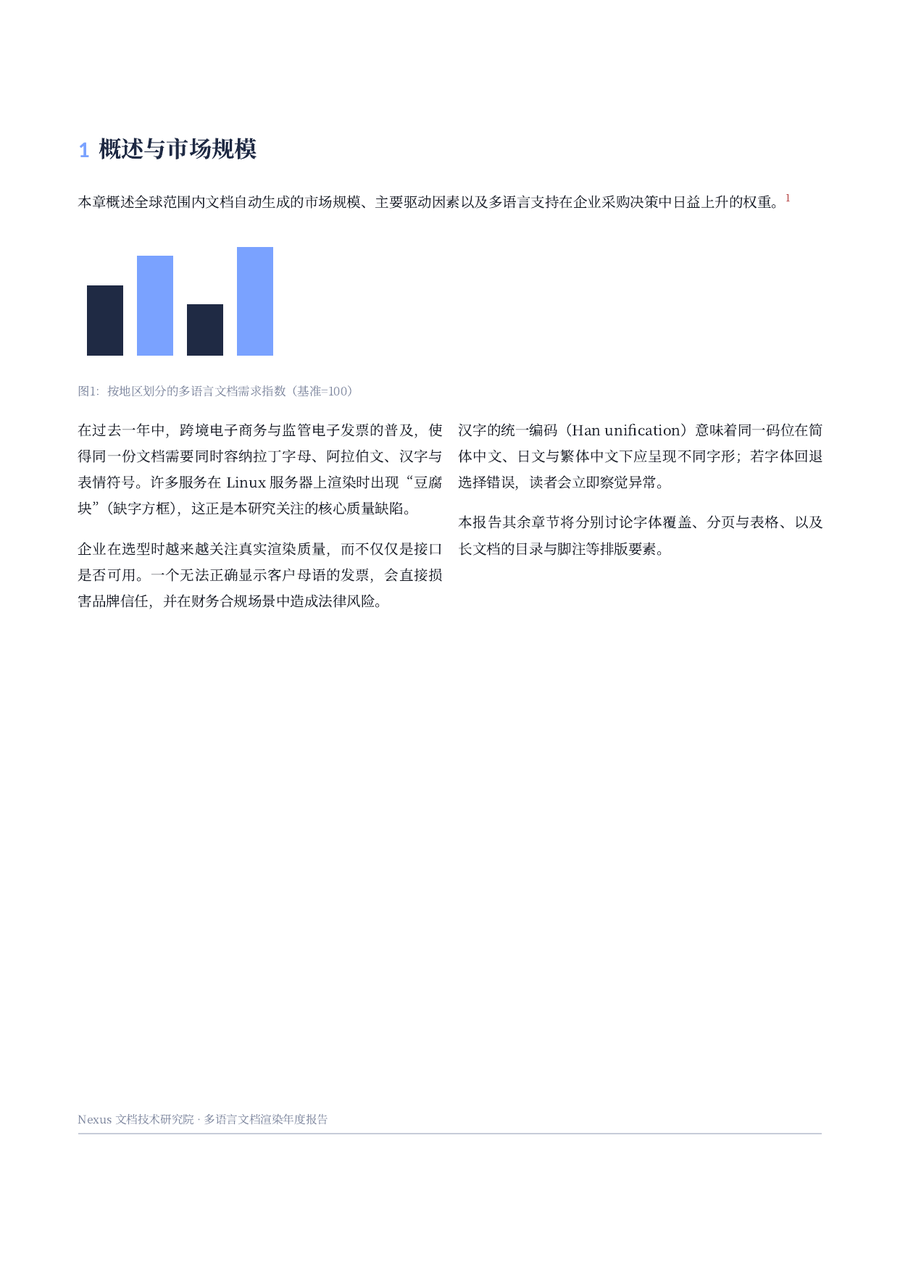
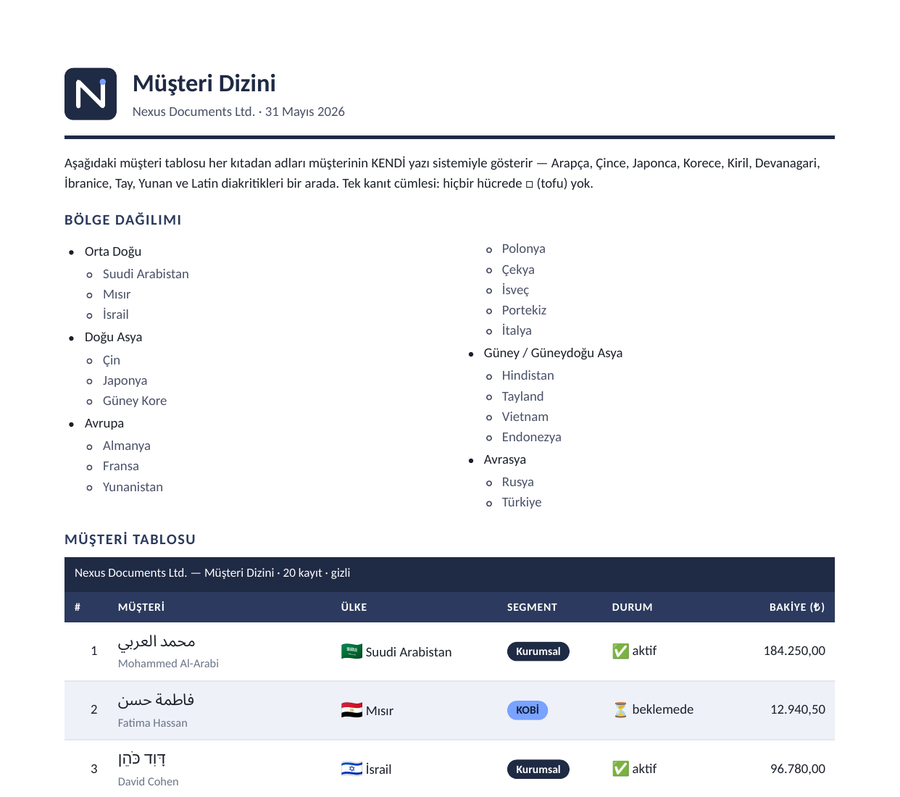
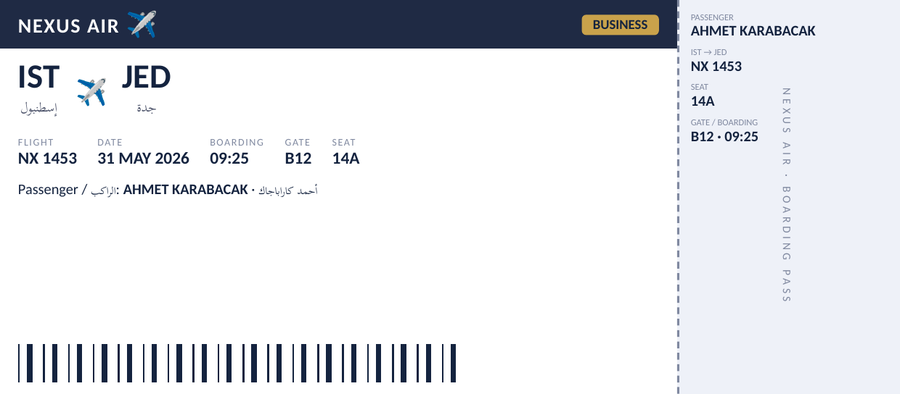
25 languages, zero tofu
Full Unicode coverage — including CJK (Chinese, Japanese, Korean) and right-to-left scripts (Arabic, Hebrew) — with OS-level fonts baked in. No missing-glyph "tofu" boxes, ever.
No broken characters. No missing glyphs. No RTL layout problems.
03
HTML, URL, template or Markdown
Render raw HTML, a public URL, a sandboxed data-driven template or Markdown — /v1/pdf/from-html, /from-url, /from-template and /from-markdown share one pipeline and one error envelope. Need an image instead? /v1/image returns PNG, JPEG or WebP.
Send us a webpage, a page of markup, Markdown or just your data — you get back a PDF.
04
OpenAPI-first
A complete OpenAPI 3.1 spec is the single source of truth. Import it to generate a typed client in any language, or call the REST endpoints directly.
Standard API docs your developer (or Make/n8n) can plug in without guesswork.
05
EU e-invoicing ready: PDF/A & ZUGFeRD
Produce archival PDF/A documents and ZUGFeRD-compliant e-invoices with embedded structured data for European document workflows.
If you need PDF/A archival or ZUGFeRD e-invoices, the format is already handled.
06
Isolated & reliable — zero data retention
Renders run in isolated, ephemeral workers behind a load-tested browser pool with per-render time caps and crash recovery. Zero data retention by default: nothing is written to a database or disk.
Your documents are processed in memory and discarded after delivery — not written to disk by default.